
Shadow IT often develops gradually as employees adopt new software. It’s not a bad thing, per se… employees use it to help solve everyday challenges and streamline their work processes. But it also comes with a ton of negatives that are commonly left unnoticed, such as creating hidden security, compliance, and operational risks across the organisation. By improving visibility into your SaaS environment, organisations can discover any unapproved applications, strengthen governance, and make more informed decisions about such software.
This guide explores practical strategies to help you identify Shadow IT, improve accountability, and maintain complete visibility across your SaaS estate without limiting innovation or productivity.
Contents
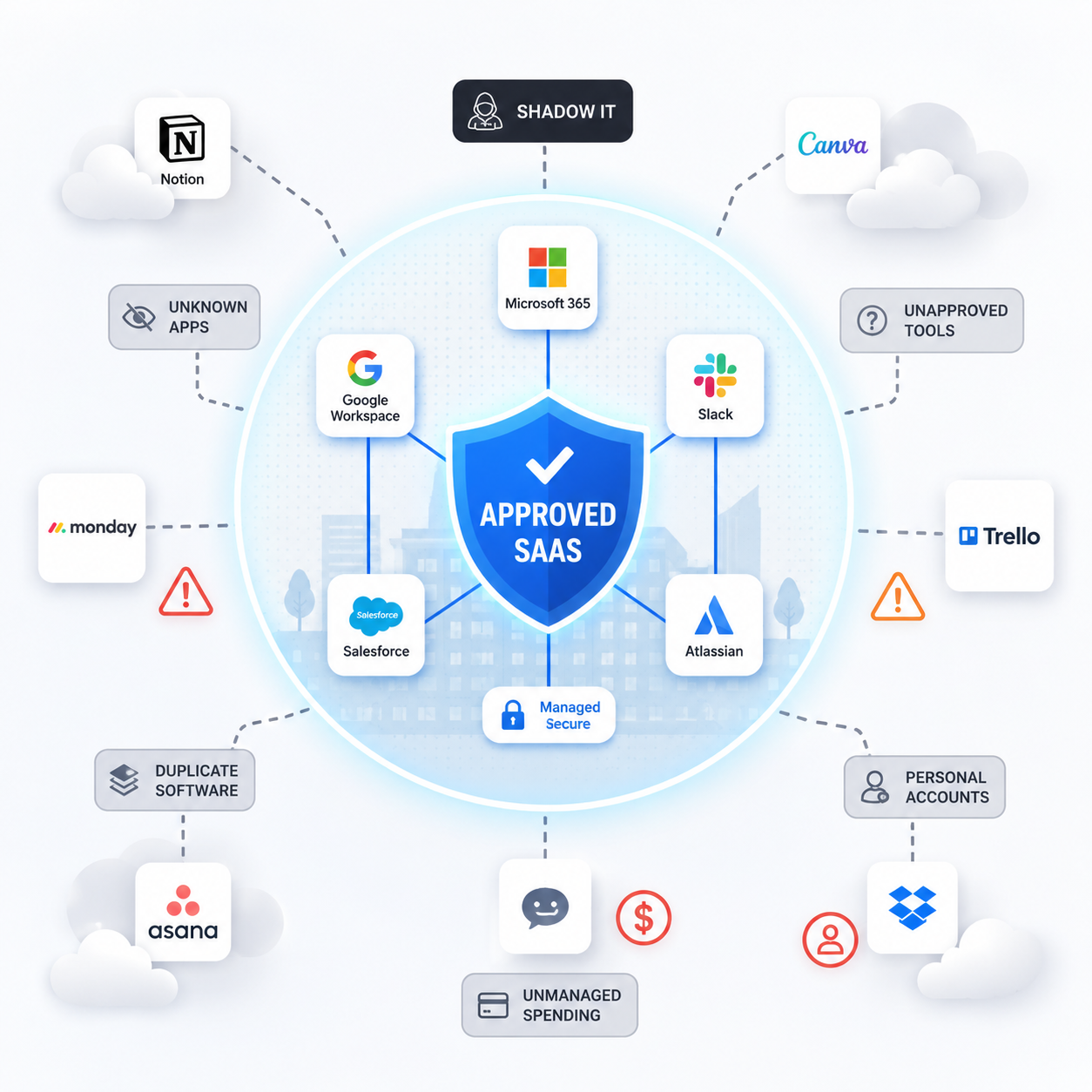
Shadow IT has become one of the biggest challenges facing modern organisations. Employees regularly adopt new software to solve problems, improve productivity, or collaborate more effectively, often without the knowledge or approval of IT teams. While these applications may appear harmless, they can introduce security risks, duplicate existing software, increase SaaS costs, and make it difficult to maintain control over your organisation’s technology environment.
Preventing Shadow IT isn’t about limiting innovation or restricting employees from finding better ways to work. Instead, it’s about creating complete visibility across your SaaS environment, understanding which applications are being used, and ensuring every tool meets your organisation’s security, compliance, and operational requirements.
This guide explores how organisations can identify Shadow IT, reduce unnecessary software risk, and build a more secure, well-managed SaaS environment without slowing down productivity.
The Software You Can’t See
Every organisation has software that IT knows about, manages, and secures. The challenge is the software that exists outside those processes. Employees often sign up for free trials, purchase subscriptions with company cards, or adopt collaboration tools independently to solve immediate business needs. Over time, these applications become part of daily workflows without ever being reviewed, documented, or approved.
In many cases, Shadow IT doesn’t develop because employees are trying to bypass company policies. It develops because people want to work more efficiently. A marketing team may find a new design platform, HR might adopt a recruitment, onboarding, or employee engagement tool, while a project team could introduce another collaboration app to speed up communication. Individually, these decisions seem harmless. Collectively, they can create a fragmented software environment that becomes increasingly difficult to manage. For HR teams, maintaining visibility over employee lifecycle applications and software access is just as important as discovering unknown SaaS applications.
As more applications are introduced without oversight, organisations begin to lose visibility into their SaaS estate. Different departments may purchase software that performs the same function, resulting in duplicate subscriptions, inconsistent workflows, and unnecessary expenditure. IT teams are then left trying to support applications they didn’t know existed, while the finance department struggles to understand where software budgets are actually being spent.
The risks extend beyond cost. Unapproved applications may not meet security standards, integrate with identity providers, or comply with internal governance policies. Sensitive company information could be stored in personal accounts, customer data may exist outside approved systems, and applications might continue running long after they are no longer needed. Without central visibility, these risks often remain hidden until they result in a security incident, failed audit, or unexpected renewal.
Shadow IT also creates challenges for employees themselves. When multiple teams use different tools for the same purpose, collaboration becomes more complicated, information is spread across disconnected platforms, and onboarding new employees takes longer because there is no clear software standard. Instead of improving productivity, an uncontrolled SaaS environment can gradually reduce efficiency across the organisation.
The good news is that preventing Shadow IT doesn’t mean preventing innovation. Employees should be encouraged to discover better ways of working, but within a framework that gives the organisation visibility, accountability, and confidence in every application being used. With the right processes and a centralised SaaS management platform, businesses can support innovation while maintaining security, governance, and financial control.
The first step towards preventing Shadow IT isn’t removing applications. It’s discovering them.

💡 Shadow IT Insight
Most Shadow IT doesn’t begin with malicious intent. It begins with employees trying to solve a problem quickly using software that hasn’t been reviewed or approved.
Three Quick Wins
Preventing Shadow IT doesn’t always require major technology changes. In many cases, small improvements to software visibility and governance can significantly reduce risk while helping employees continue working productively. These practical steps provide a strong starting point for organisations looking to regain control of their SaaS environment.
- Review recently adopted software: Identify new applications that have been introduced without a formal approval process.
- Compare similar applications: Look for multiple tools performing the same task across different departments.
- Create a central software inventory: Maintain a single view of approved applications, helping employees understand which tools should be used across the organisation.
Building a Safer SaaS Environment
Shadow IT isn’t eliminated by restricting employees or preventing them from adopting new technology. Instead, it is reduced by creating clear processes, improving software visibility, and making it easier for teams to use approved applications. When employees can quickly access the tools they need and IT has complete visibility across the software environment, organisations can encourage innovation without sacrificing security or governance.
Preventing Shadow IT isn’t about restricting employees or limiting innovation. Instead, it relies on creating repeatable processes, improving software visibility, and making it easy for teams to access approved applications. As organisations grow, these governance practices become an important part of day-to-day business operations, helping departments work more efficiently while maintaining consistent oversight of the software they rely on. And then as new applications emerge and business needs evolve, organisations should regularly review their software estate to ensure every application is understood, appropriately managed, and aligned with business objectives.
Five Practical Ways to Prevent Shadow IT
Preventing Shadow IT isn’t about restricting innovation or limiting the tools employees can use. Instead, it starts with creating better visibility, establishing clear software governance, and making it easy for teams to access approved applications. By taking a proactive approach to SaaS management, organisations can reduce security risks, improve compliance, and maintain greater control over their software environment without impacting productivity.
The following best practices can help organisations identify unknown applications, strengthen governance, and build a more secure, transparent SaaS ecosystem.
- Create a Central Software Inventory: Maintain a complete inventory of approved applications so employees know which tools are available and IT has visibility across the software environment.
- Make Software Requests Simple: Provide employees with an easy way to request new applications. If the approval process is straightforward, staff are less likely to adopt unapproved software independently.
- Review New Applications Regularly: Monitor recently introduced software to identify applications that have been adopted outside existing governance processes before they become widespread.
- Standardise Common Tools: Reduce duplication by agreeing on approved applications for collaboration, project management, communication, and file sharing across the organisation.
- Monitor Your SaaS Environment Continuously: Software environments change constantly. Regular reviews help identify new applications, inactive software, duplicate tools, and emerging Shadow IT risks before they affect security or budgets.
💡 Governance Insight
The goal isn’t to stop employees discovering better tools. It’s to ensure every application is visible, secure, and aligned with your organisation’s policies.
How SaaSi Hub Helps Prevent Shadow IT
Identifying Shadow IT becomes significantly easier when organisations have complete visibility into their SaaS environment. Rather than relying on spreadsheets, manual audits, or user surveys, SaaSi Hub provides a central platform for discovering applications, monitoring software usage, and improving SaaS governance across the organisation. By bringing software, users, and subscriptions together in one place, businesses can identify unknown applications, reduce unnecessary risk, and make informed decisions with confidence.
Maintaining an accurate software inventory shouldn’t rely on manual updates. SaaSi Hub’s integrations automatically synchronise application and user data, helping organisations maintain an up-to-date view of their SaaS environment. This reduces administrative effort while making it easier to identify newly adopted applications and maintain ongoing software visibility.
Clear reporting helps organisations understand how software is being used, identify emerging trends, and support informed governance decisions. By reviewing application data regularly, IT teams can proactively identify potential Shadow IT risks before they become larger operational or security challenges.
Building a Culture of SaaS Visibility
Shadow IT isn’t a problem that can be solved once and forgotten. As organisations grow, employees adopt new tools, departments evolve, and software requirements change. Maintaining visibility across your SaaS environment is an ongoing process that requires clear ownership, regular reviews, and the right technology to support informed decision making.
By combining software discovery, centralised application management, and proactive governance, organisations can reduce unnecessary risk while giving employees access to the tools they need to work effectively. Rather than restricting innovation, a transparent SaaS management strategy creates an environment where new applications can be adopted confidently, securely, and with complete organisational visibility.
“The biggest risk isn’t the software you know about, it’s the software you don’t. When organisations gain complete visibility into their SaaS environment, they can make smarter decisions, reduce unnecessary risk, and give every application the oversight it deserves.”
Michael Cook, Founder, SaaSi Hub
Continue Your SaaS Management Journey
Reducing SaaS costs is just one part of building a well-managed software environment. Explore our other Solutions guides to discover practical advice on improving visibility, strengthening governance, and managing every stage of your SaaS lifecycle.
You may also find these guides useful: