
Contents

There’s no shame in saying it – modern organisations rely on Software as a Service (SaaS) to power almost every aspect of their business, it’s just the way it is. From accounting and payroll to customer relationship management, collaboration, marketing, and project management, cloud applications have become a significant and growing operational expense. For finance teams, managing this investment has become increasingly complex as organisations adopt more software across every department.
While SaaS provides flexibility and supports growing businesses, it also creates new financial challenges. Recurring subscriptions, multiple billing cycles, automatic renewals, departmental purchasing, and changing licence requirements can make it difficult to maintain a complete picture of software expenditure. Without accurate visibility, forecasting becomes less reliable, budgets become harder to control, and opportunities to optimise spending may be overlooked.
Effective SaaS management gives finance teams the visibility needed to understand where software budgets are being invested, identify unnecessary expenditure, prepare for future renewals, and support more informed financial planning. Rather than simply reducing costs, it enables organisations to ensure every software investment continues delivering measurable business value.
Why Finance Teams Need Greater SaaS Visibility
Finance teams are responsible for far more than approving software purchases. They play a central role in forecasting operational expenditure, monitoring recurring costs, supporting procurement decisions, and ensuring technology investments align with wider business objectives. As organisations adopt more SaaS applications, maintaining visibility across this growing software estate becomes an increasingly important part of effective financial management.
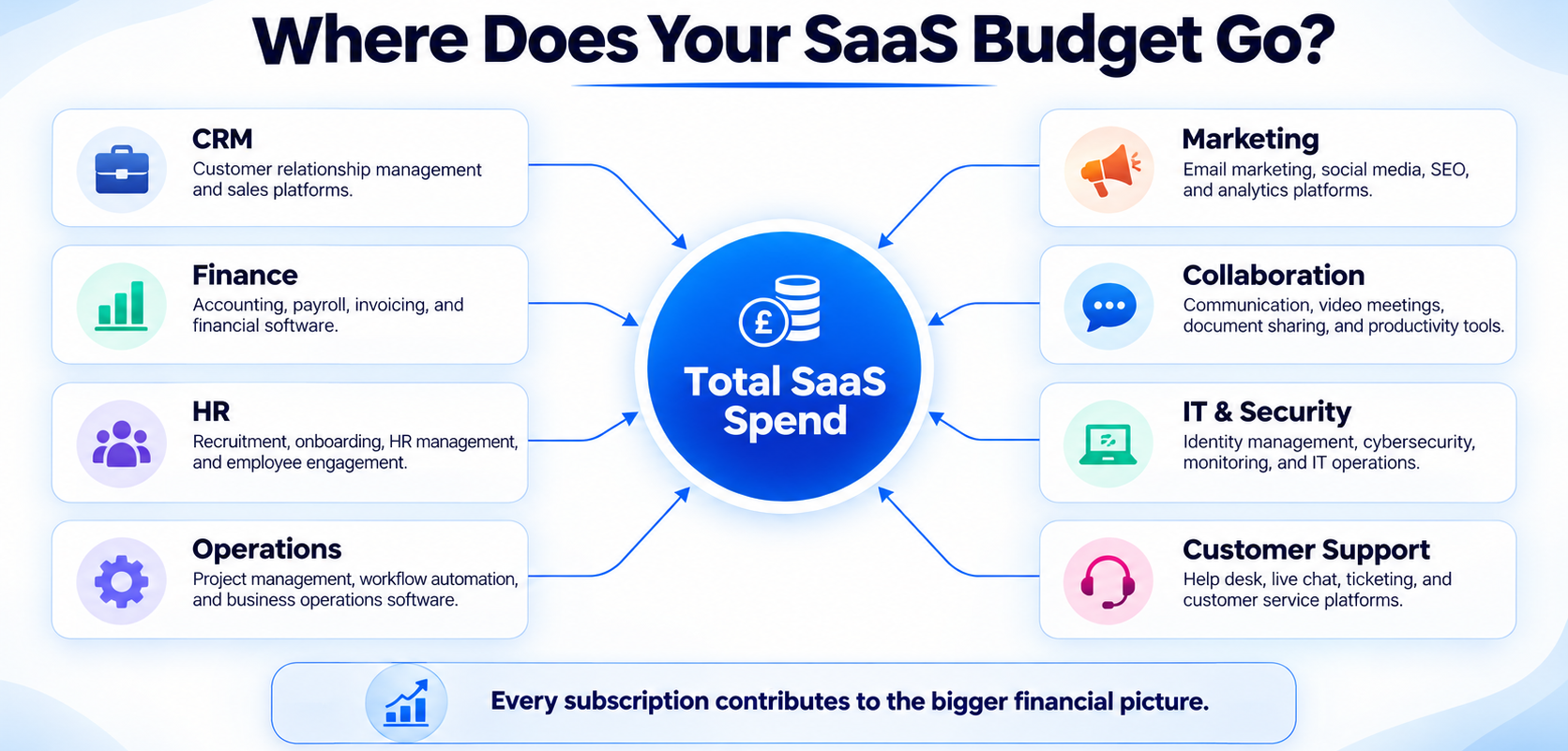
One of the biggest challenges is that SaaS spending is rarely concentrated within a single department. Marketing, HR department, the IT team, operations, sales, and customer support may all purchase software independently to meet their own operational requirements. While these investments often provide significant value, they can also make it difficult for finance to understand the organisation’s total SaaS expenditure, identify overlapping subscriptions, or anticipate future financial commitments.
Without centralised visibility, finance teams may spend valuable time reviewing invoices, reconciling subscriptions, tracking renewal dates, and requesting information from different departments before accurate budgeting decisions can be made. These manual processes not only consume time but also increase the risk of unexpected costs and missed optimisation opportunities.

💡 Finance Insight
SaaS management isn’t simply about reducing software costs. It’s about giving finance teams the visibility needed to budget accurately, forecast confidently, and ensure every software investment supports measurable business outcomes.

The Hidden Cost of Poor SaaS Visibility
For many finance teams, the greatest challenge isn’t the size of the software budget, it’s the lack of visibility into how that budget is being used. SaaS spending often develops gradually over time as different departments adopt new applications to solve individual business challenges. While each purchase may be justified in isolation, the overall financial picture can become increasingly difficult to understand without a centralised view of the organisation’s software estate. This lack of visibility creates more than administrative complexity.
Duplicate applications, forgotten subscriptions, unused licences, and overlapping functionality can all contribute to unnecessary expenditure that may go unnoticed for months or even years. At the same time, recurring renewals and changing licence requirements make accurate budgeting more challenging, particularly when software is managed independently across multiple departments. Finance teams also face increasing pressure to forecast software expenditure with greater accuracy. As SaaS becomes a larger proportion of operational costs, understanding future financial commitments is essential for effective budgeting and strategic planning. Without reliable data, unexpected costs can occur, with renewals getting out of hand and automatically getting billed month-by-month and year-by-year.
Greater visibility transforms this process. By understanding where money is being spent, who owns each subscription, and when contracts renew, finance teams can make more informed decisions, identify optimisation opportunities, and ensure software investments continue supporting the wider objectives of the business.
“Finance teams shouldn’t have to piece together software costs from dozens of invoices, spreadsheets, and departments. The right visibility transforms SaaS from a difficult-to-manage expense into a strategic business investment.”
Michael Cook, Founder, SaaSi Hub
Building a Smarter SaaS Budget
Managing SaaS effectively is no longer just about reducing expenditure. Modern finance teams are increasingly focused on ensuring every software investment delivers measurable value while supporting the organisation’s long-term objectives. This requires moving beyond reactive budgeting towards a more proactive approach that combines visibility, forecasting, and ongoing optimisation.
A smarter SaaS budget begins with understanding the complete software landscape. Finance needs the reassurance and confidence that every application has a clear business purpose, appropriate ownership, and measurable value. By regularly reviewing subscription data, licence allocation, and renewal schedules, organisations can identify opportunities to optimise spending before unnecessary costs occur rather than reacting after budgets have already been exceeded.
Planning ahead also creates stronger relationships with other departments. Instead of reviewing software purchases only when invoices arrive, finance can collaborate with IT, procurement, HR, and operational teams to understand future requirements, anticipate renewals, and support more strategic purchasing decisions. This shared visibility encourages better financial planning while helping ensure software investments remain aligned with wider organisational goals.
Ultimately, an effective SaaS budget isn’t simply one that spends less. It’s one that invests wisely, providing employees with the tools they need while ensuring every pound contributes measurable value to the organisation.

💡 Did You Know?
Software subscriptions are often spread across multiple departments, making it difficult for Finance teams to see the organisation’s total SaaS spend without a centralised management platform.
How SaaSi Hub Helps Finance Teams
Finance teams need more than a list of software subscriptions, they need accurate, real-time visibility that supports budgeting, forecasting, and strategic financial planning. SaaSi Hub provides a centralised platform that brings together SaaS subscriptions, users, spending, renewal dates, and application ownership into a single source of truth, helping finance teams make faster, more informed decisions.
Rather than relying on disconnected spreadsheets or manually reviewing invoices from multiple vendors, finance teams can access a complete overview of their organisation’s SaaS environment in one place. This makes it easier to understand where software budgets are being allocated, monitor recurring expenditure, and identify trends that may otherwise remain hidden.
One of the platform’s most valuable capabilities is cost analytics, which transforms software spending into meaningful financial insights. Instead of simply displaying individual subscription costs, spending patterns can be analysed across departments, identify opportunities for optimisation, and monitor how SaaS expenditure changes over time. These insights support more accurate budgeting while helping ensure software investments continue delivering value to the business.
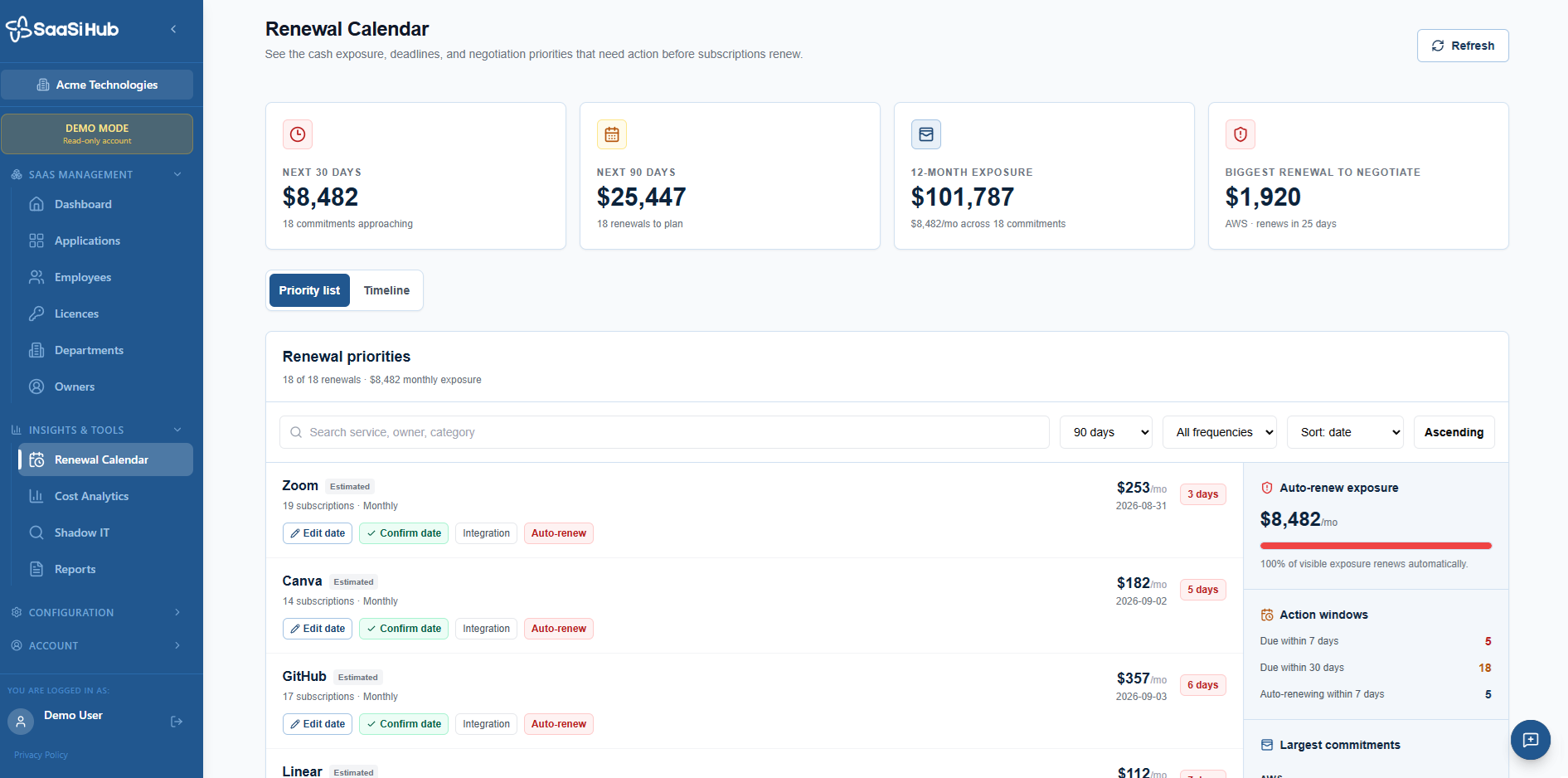
Planning for the future is also as equally important. SaaSi Hub’s renewal calendar provides visibility into upcoming renewals, allowing finance teams to prepare for future commitments, avoid unexpected expenditure, and coordinate purchasing decisions with procurement and department managers. Combined with organisation-wide reporting and real-time software visibility, this enables the move from reactive cost management to proactive financial planning. SaaSi Hub encourages stronger collaboration across the organisation. Rather than managing software costs in isolation, finance becomes part of a connected decision-making process where every technology investment can be evaluated against wider business goals.

The most successful finance teams don’t simply report on software spending. They use accurate, real-time insights to influence purchasing decisions, improve forecasting, and maximise the value of every SaaS investment.
Making Every Software Investment Count
When it comes to business costs, successful SaaS management isn’t measured by how many subscriptions are reduced or how many licences are cancelled. Success comes from ensuring every software investment delivers measurable value while supporting the organisation’s wider objectives. This requires visibility, collaboration, and the confidence to make informed decisions based on accurate, up-to-date information.
As SaaS adoption continues to increase, finance will play an even more strategic role in technology investment. Budget forecasting, vendor management, operational efficiency, and cross-department collaboration are becoming increasingly connected, making software management an important part of long-term financial planning rather than simply an operational expense.
Organisations that invest in better SaaS visibility today will be better prepared for tomorrow’s challenges. By understanding where money is being spent, anticipating future commitments, and working collaboratively with other departments, finance teams can help build a stronger, more resilient business that continues to innovate while maintaining financial control.
“Every software subscription represents an investment in the business. When Finance teams have complete visibility, they can move beyond managing costs and start maximising value.”
Michael Cook, Founder, SaaSi Hub
Continue Your SaaS Management Journey
If you’re looking to strengthen the way your business manages software subscriptions, users, renewals, and SaaS spending, explore our other resources designed to help organisations build stronger software management practices.
You may also find these guides useful: